Kim Westerman, MFA, EdD, is a travel and wellness writer, coffee expert and longtime university writing teacher based in Berkeley, California.
Author Page
Discon
nected
Disconnected
How technology is complicating healthcare access for older adults
IIllustrations by Mel Haasch
Health & Well-Being
For many older adults, the greatest barrier to health care today is not insurance coverage, transportation or even the availability of providers. It is technology. Scheduling appointments, accessing test results, attending telehealth visits, refilling prescriptions and enrolling in support services now routinely require navigating digital platforms that assume access, fluency and confidence with technology. For older adults with limited income, disabilities, language barriers, unreliable internet or simply a lack of technical knowledge, these systems can quietly but decisively cut them off from care.
Older adults are being asked to “jump through hoops” created by health care’s rapid digitization, often without the tools or support they need to succeed, reports Amanda M. Simanek, PhD, MPH, director of the Michael Reese Foundation Center for Health Equity Research and associate professor of epidemiology at Rosalind Franklin University’s Chicago Medical School. Dr. Simanek’s research on this topic finds not merely a collection of individual frustrations but a structural failure.
What Dr. Simanek is observing locally is also happening nationwide, the downstream effect of decades of policy and design decisions made without older adults at the center. During the past 15 years, health systems, insurers and government agencies have rapidly shifted scheduling, communication, records access and even eligibility verification to digital-first platforms. The start of the COVID-19 pandemic in 2020 necessitated a much broader-scale technological approach that continues to this day. One consequence is a system that increasingly presumes broadband access, smartphone ownership, password fluency, and visual and cognitive ease — assumptions that are simply not true for millions of older Americans.
According to the Pew Research Center, roughly one in four adults age 65 and older does not use the internet, and nearly 40% lack home broadband, with rates even higher among those with disabilities, low income or limited English proficiency. Further, federal data from the U.S. Department of Health and Human Services shows that older adults with limited digital access are significantly less likely to use patient portals or participate in telehealth visits, even when those services are the primary mode of care.
Digital exclusion has risen to be a driver of health inequities, linked to missed follow-up care, medication errors, delayed diagnoses and avoidable hospitalizations among older adults with chronic conditions. Researchers at the National Academies of Sciences, Engineering and Medicine caution that failure to address digital access and support risks creating a two-tiered health system — one in which digitally fluent patients can access care, while millions of older adults face growing isolation, deteriorating health outcomes and loss of autonomy.
There are concentrated efforts afoot in many corners of the healthcare-services ecosystem to address these growing access issues. In the past 5–7 years, “digital navigators” have emerged nationwide as a distinct healthcare role designed to help people — especially older adults, low-income households and people with disabilities — access broadband, devices and digital skills needed for health care, education and public services. Locally, the Lake County Digital Growth Initia-tive, a partnership of county agencies, libraries, health systems, community organizations and educational institutions — including RFU — is working to address digital barriers at multiple levels, including training and deploying digital navigators. (See sidebar on p. 33 for more on navigators.)
“These digital navigators help patients figure out very basic but essential things for accessing digital-based healthcare resources,” explains Dr. Simanek, who represents RFU’s Center for Health Equity Research in the coalition. “Do they have an email account? Do they have access to a laptop and reliable internet? Can they use a Zoom link?”
Digital navigators can assist patients with setting up accounts, navigating portals, understanding instructions and troubleshooting technical problems, often in real time, just before or after a medical visit. This hands-on support transforms digital access from an abstract expectation into a supported process.
While telehealth is often promoted as a solution for increasing access to healthcare services, Dr. Simanek describes a persistent irony: The populations who could benefit most from telehealth are often the least equipped to use it.
A research project Dr. Simanek mentored by second-year Chicago Medical School student Tan Nguyen, who has an interest in ophthalmology, aims to characterize census tracts in Lake County with high need for telehealth services, specifically tracts with high proportions of older adults; individuals with vision impairment, mobility impairment and lack of vehicle access; and limited brick-and-mortar eye-care facilities. These same areas frequently had lower proportions of households with lower broadband access and fewer internet-enabled devices.
“We have to turn our communities to understand what people are actually dealing with. That Builds trust. Trust improves health and healthcare.”
“You can see this confluence where the need is highest and the readiness is lowest,” Mr. Nguyen explains. “These challenges are particularly concerning given the high prevalence of chronic, age-related eye diseases that require regular follow-up.”
Without patient support, improvements in broadband infrastructure and increasing access to devices, a shift toward telehealth services risks widening health inequities rather than closing them. Beginning in the late 1990s, San Diego–based psychiatrist Christopher Morache, MD ’97, practiced “telemedicine.” Patients, many of them older adults, traveled to their local primary-care offices, where staff handled the technology.
“Going to the family doctor was not a problem,” Dr. Morache recalls. “So, we phoned in to patients there. The burden of technology fell on the doctor’s office, not patients.”
Dr. Morache now mitigates patients’ technology challenges in his own office by offering practice telehealth sessions with a nurse before a patient’s first appointment to confirm that the patient can access the virtual visit. This simple step reduces anxiety, prevents failed visits and preserves clinical time. “It keeps everyone at ease,” he says.
But, he adds, most of today’s consumer-facing telehealth platforms reverse that model, placing responsibility on individual patients to manage devices, apps, passwords and connectivity, often without assistance. Which takes us right back to older adults not being able to access health care.
Laila G. Navarro, MSN, RN, VHA-CM, director of telehealth services for RFU’s neighboring VA clinical partner, Captain James A. Lovell Federal Health Care Center, describes a systemic approach to digital access — one that embeds support into the system rather than shifting responsibility onto patients. In her role overseeing virtual health programs, Ms. Navarro helps operationalize the VA’s long-standing recognition that digital access is a prerequisite for care. Central to this effort is the VA’s Digital Divide Consult, a referral embedded directly into the medical record that allows providers to trigger a structured assessment by a social worker when a veteran lacks connectivity, devices or digital confidence. Depending on need and eligibility, veterans may be connected to subsidized broadband through the Federal Communications Commission’s Lifeline program or issued a VA–loaned tablet with data included, followed by hands-on setup, test calls and ongoing technical support.
“The goal is empowerment,” Ms. Navarro explains, ensuring veterans know both that they have a choice in how care is delivered and that help is available when technology fails or skills lapse. By keeping the burden of technology within the institution, rather than on older adults managing illness, disability or distance, this model restores what Ms. Navarro calls the ability to “pivot the power” back to patients, allowing telehealth to function as an access point rather than another gatekeeper.
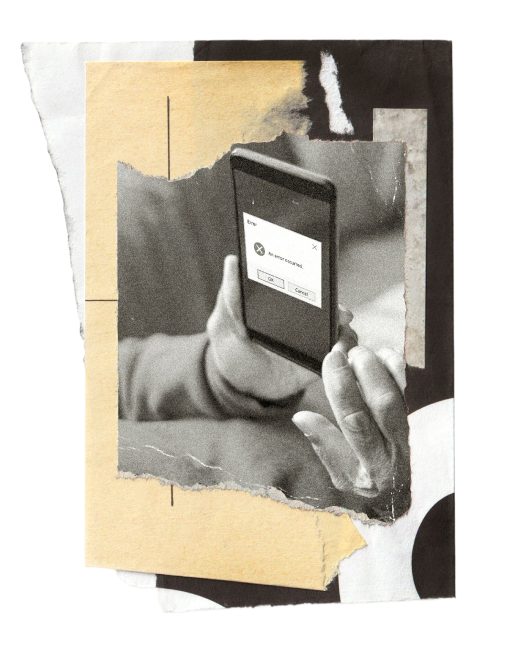
The experiences of older adults navigating digital health systems is the predictable outcome of systems designed without the most vulnerable users in mind. Healthcare professionals and organizations large and small are finding ways to ameliorate the current state of disconnectedness among older adults. As health care continues on its digital path, the critical question is no longer whether technology will shape access, but how we can design and support ways that include older adults rather than leaving them disconnected.
Published June 23, 2026